
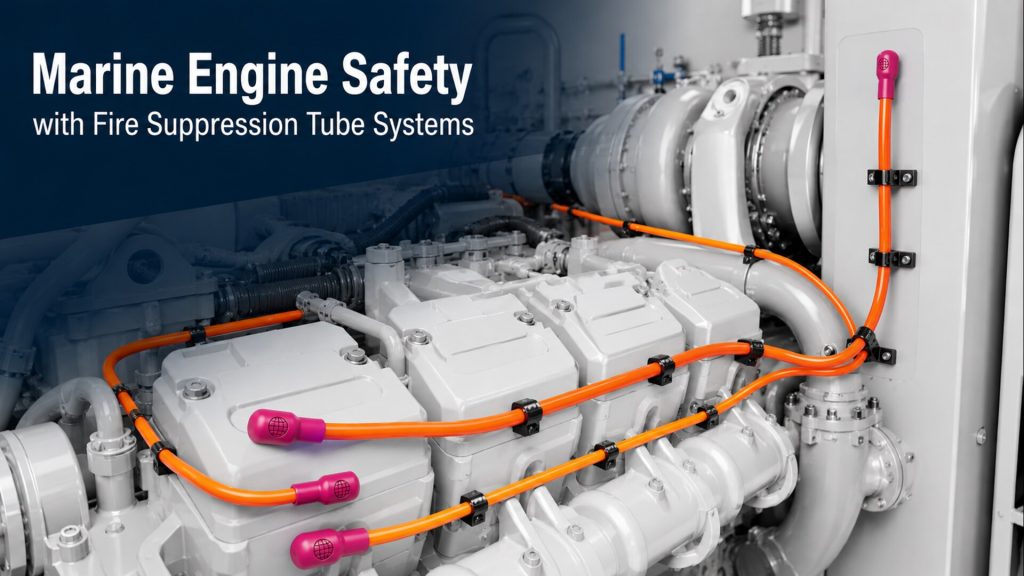
Engine fires destroy vessels in minutes. You need reliable, immediate protection. We provide exactly that. At Fire Stopper Systems, we prioritize straightforward safety.Automatic Tube Fire Suppression Systems are self-activating fire protection units. A pressurized tube bursts under high heat, releasing a clean extinguishing agent. This stops the fire at its source within seconds.
Boat engines operate in tight, enclosed spaces. They generate immense heat during operation. Fuel and oil lines run close to hot exhausts. These factors create massive fire hazards.
Engine rooms lack natural ventilation. Heat builds up quickly in these areas. A small spark easily ignites fuel vapors. You must stop these fires immediately. Our systems provide instant marine engine compartment fire protection.
A fire at sea is a critical emergency. Evacuating a burning boat is incredibly dangerous. You must prevent the fire from spreading. Our boat fire suppression systems save lives. They stop the threat before it grows out of control.
Fires cause catastrophic financial damage. Commercial vessel operators lose income during lengthy repairs. Recreational owners lose their valuable investments. Fast fire suppression minimizes this structural damage. Your vessel stays safe and operational.
Our systems use simple, proven technology. They rely on steady pneumatic pressure, not fragile electronics. This makes them incredibly reliable. They work precisely when you need them most.
We use strong polyamide materials for our tubes. This specific tube acts as a continuous heat sensor. We route it directly above high-risk areas. It operates constantly at around 15 bar pressure.
The tube activates automatically when ambient temperatures rise. It typically bursts between 100°C and 120°C. The burst point creates an immediate nozzle. The system releases the agent right onto the flames.
We use specific clean agents to fight the fire. These agents do not leave a messy residue. They cause zero water damage. Your sensitive engine electronics remain perfectly safe.
Old fire systems are highly complex. They require large control panels and complicated wiring. They often fail completely during power outages. We offer a better, more practical solution.
A boat fire often destroys electrical wiring first. Traditional electronic sensors will fail instantly. Our automatic marine fire extinguishing systems do not use electricity. They are entirely mechanical. They activate without any external power.
Complex electrical systems take days to install. They require expensive marine engineers to wire them. Our pneumatic tube systems are much simpler. You can install them quickly. This drastically reduces your total installation costs.
Marine maintenance is already difficult enough. You do not need complex safety gear adding to the workload. Our systems require very little upkeep. You just check the pressure gauge regularly. This simple visual check confirms the system is ready.
Different boats have different safety needs. We protect all types of vessels. Our systems scale to fit your exact dimensional requirements. We serve boat owners and fleet managers across the USA.
Yacht owners need reliable, unseen protection. Engine compartments on yachts are usually compact. Our flexible tubes fit perfectly in these tight spaces. We protect your luxury investment continuously.
Fishing boats work in harsh conditions. They operate far from rescue services. Reliable engine room fire protection is absolutely mandatory. Our rugged systems handle these tough maritime environments.
Ferry operators must protect hundreds of passengers daily. Workboats run heavy machinery under heavy loads. Both require heavy-duty marine engine room safety. We provide the robust protection these commercial fleets demand.
You must choose the right system for your boat. We help you make the best, most practical choice. Sizing and placement are critical for success. You need accurate data to decide.
First, measure your engine room accurately. Calculate the total cubic volume of the space. The system size depends entirely on this specific number. We use this volume to select the right agent capacity.
Next, look at your engine layout. Find the turbochargers and exhaust manifolds. Locate the fuel pumps and electrical panels. These are your main fire hazards.
Finally, plan the tube routing carefully. The tube must sit directly above the hazards. It needs to catch the rising heat instantly. Proper placement ensures fast marine fire detection systems activation.
Safety rules are strict in the modern maritime industry. The Coast Guard enforces heavy regulations. You must comply to operate legally and safely. We make compliance easy and straightforward.
Insurance companies demand extensive fire protection. They will reject claims if you lack proper safety gear. Installing our systems lowers your overall risk profile. This often leads directly to reduced insurance premiums.
Marine safety inspectors look closely at engine rooms. They check for proper fire extinguishing equipment. Our systems pass these strict inspections easily. They are recognized, proven safety devices.
Installation requires a practical, hands-on approach. We focus on securing the system properly. A loose tube will not detect fires accurately. We always recommend professional integration.
First, find a secure mounting location. Keep the cylinder outside the extreme heat zones. Bolt the bracket firmly to a solid bulkhead. Place the cylinder securely inside the bracket.
Next, attach the tube to the main cylinder valve. Route the tube through the engine compartment. Use metal clips to secure it every few feet. Keep the tube taut but never stretched.
Finally, double-check all hardware connections. Ensure the tube is clear of moving engine parts. Open the cylinder valve to pressurize the tube. Check the gauge to confirm 15 bar pressure.
We take a direct, factual approach to safety. We do not sell unnecessary, bloated features. We provide systems that actually work in the real world. Our focus is purely on stopping fires fast.
We supply top-tier systems nationwide. Our team understands marine engineering deeply. We know exactly how boat engines fail. We use this specific knowledge to build better safety products.
Fire damage costs millions of dollars. Our systems cost a tiny fraction of that amount. They are a smart, practical investment for any owner. We save you money by preventing total disasters.
Fires start in places other than the main engine. You must protect all machinery spaces onboard. Our flexible systems cover these extra hazards easily.
Modern boats have large electrical cabinets. Short circuits cause severe fires here frequently. You can run our suppression tubes directly inside these cabinets. This stops electrical fires instantly.
Marine generators act as secondary engines. They run constantly and get very hot. They require their own dedicated fire protection. We size specific systems just for your generators.
Our systems rely on basic physics and chemistry. High heat weakens the durable polyamide tube. The internal pressure bursts the weakened spot. The sudden pressure drop releases the chemical agent.
The clean agent floods the enclosed space rapidly. It removes heat from the active fire triangle. It also interrupts the chemical chain reaction. The fire dies out almost instantly.
Stopping the fire is only the first step. You must prevent it from starting again. The agent remains in the air briefly. This cooling effect prevents immediate re-ignition of the fuel.
We have seen our systems work in the field. A commercial workboat recently suffered a fuel line leak. The raw fuel hit the hot exhaust manifold. A fire started immediately in the engine room.
Our tube was mounted directly above the exhaust. The intense heat burst the tube in seconds. The agent deployed before the crew even noticed the smoke. The fire was extinguished instantly.
The crew cleaned up the leaked fuel. They fixed the broken fuel line right away. They replaced the deployed fire cylinder system. The boat was working again the very next day.
You must maintain your safety equipment regularly. Even simple systems need basic visual checks. We keep our maintenance protocols brief and clear.
First, check the pressure gauge every day. The needle must stay securely in the green zone. This takes only two seconds. It confirms the system is fully pressurized.
Next, inspect the tube routing once a month. Look for severe wear or physical damage. Ensure the metal mounting brackets remain tight. The tube must stay in its proper position.
Finally, plan for eventual part replacement. The agent cylinders have a specific functional lifespan. You must replace or refill them every few years. We provide fast refill services across the USA.
They use a pressurized polyamide tube. The extreme heat from a fire softens the plastic. The internal pressure causes the tube to burst at the hottest point.
No. We use specialized clean agents. They are non-corrosive and leave absolutely no residue. They do not cause water damage to engines or sensitive electronics.
You can install them yourself. However, we strongly recommend using a certified marine technician. Proper tube placement is critical for the system to work effectively.
Fuel leaks and electrical shorts are the main causes. When flammable liquids hit hot engine parts, fires start instantly. Proper daily maintenance reduces this severe risk.
Yes. We can add an optional pressure switch easily. When the tube bursts and pressure drops, the switch triggers your boat alarm.
Yes. Our systems meet strict safety standards perfectly. They are suitable for commercial and recreational vessels operating legally across the USA.
The deployment is virtually instantaneous. Once the tube bursts, the agent discharges under high pressure. It floods the entire compartment within seconds.