
A fire inside your control cabinet destroys your equipment in minutes. You lose the hardware, your production stops, and you face massive replacement costs. We see facilities across the USA suffer unexpected downtime because they fail to protect the source of the heat.
Automatic fire suppression systems stop this damage. They kill fires directly inside the enclosure before the flames spread. We build Fire Stopper Systems to protect your hardest-working machines.
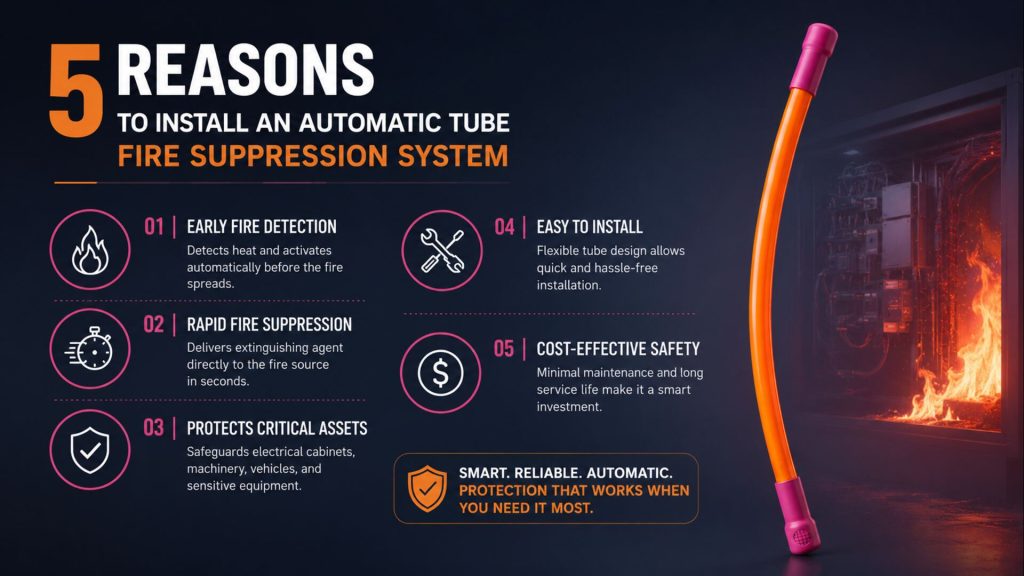
An automatic fire suppression tube is a pressurized polymer line that detects heat and puts out fires. The tube bursts when flames touch it, releasing a chemical agent directly onto the burning components.
This mechanism works on pure physical reactions. The polyamide tube holds pressure at about 15 bar. A localized fire heats the air inside the box.
The plastic melts and breaks open when temperatures reach 120°C. The internal pressure drops instantly. This drop either releases the agent straight through the hole or triggers a separate valve on the main cylinder.
First, time dictates how much hardware you lose during an electrical fire. Standard room detectors wait for smoke to leave the cabinet and reach the ceiling. Your wiring is completely gone by the time those alarms sound.
A tube-based fire suppression system lives directly inside the box. The heat hits the pressurized tube immediately. The material ruptures upon contact with the heat signature.
This setup triggers rapid fire suppression. The clean agent floods the confined space in a matter of seconds. You stop the fire before it causes structural damage to your factory floor.
Next, modern manufacturing requires complex electronics packed into small spaces. CNC machines and PLC cabinets contain high-voltage components operating tightly together. A small short circuit easily starts a localized fire.
We design our systems specifically for electrical cabinet fire suppression. The flexible tubing bends and routes directly above high-risk contactors, relays, and power supplies. You place the sensor right where the heat generates.
Examples of cabinet protection:
The chemical agent puts out the fire fast. Your core hardware stays intact.
Then, power failures often accompany electrical fires. A safety setup that relies on electrical sensors goes blind when the grid drops.
Our self-activating fire suppression tube works entirely on pneumatic pressure. The tube holds nitrogen or the clean agent securely. The physical heat of the fire melts the plastic.
This mechanical rupture opens the main valve. The system deploys the agent using zero outside electricity. You maintain continuous fire suppression for control panels even during total facility blackouts.
After that, water destroys electronics just as completely as a fire. Factory sprinkler systems flood your expensive PLC drives and server racks when they go off. You survive the fire and then lose the hardware to severe corrosion.
We use clean agents in our automatic fire suppression for electrical panels. These chemicals extinguish the flames by removing heat or disrupting the chemical reaction. They leave absolutely no residue behind.
The agent evaporates completely into the air. You just ventilate the room, wipe away the soot, and replace the burnt wire. This approach saves facilities thousands of dollars in secondary water damage.
Finally, building-wide gas suppression setups cost a massive amount of money. You have to seal the entire room, install heavy tanks, and run metal piping networks.
An electrical enclosure fire suppression system applies protection only where you need it. You protect the small space inside the cabinet instead of the massive volume of the whole factory floor.
This targeted approach slashes installation costs. The simple design requires very low maintenance. You just check the pressure gauge periodically to confirm readiness. Fire Stopper Systems deliver dependable safety without the heavy engineering bill.
The core components of a fire suppression tubing system
A functional setup requires a few specific parts to work correctly. We build these systems using simple, durable components.
The storage cylinder holds the extinguishing agent under pressure. You mount this tank securely outside or inside the electrical box. The agent remains stable inside this metal cylinder for years.
The detection tube acts as a linear pneumatic sensor. You route this flexible line through the cabinet using zip ties. It covers every major component.
You can choose between two main configurations for your equipment.
A direct system releases the fire-killing gas straight out of the melted hole in the tube. The burst creates a temporary nozzle. The agent sprays exactly at the hottest point of the fire.
An indirect system uses the tube only for detection. The pressure drop opens a master valve on the cylinder. The agent flows through a separate braided hose and discharges through fixed metal nozzles.
Comparing direct and indirect setups:
Both methods deliver fast industrial control cabinet fire protection. We can help you pick the exact configuration for your factory.
Industrial facilities across the country use these tubes to protect their expensive assets. You install them in areas where a fast response stops a major accident.
Metalworking creates hot chips and uses oil-based coolants. A rogue spark ignites the mist instantly. We install automatic fire suppression systems inside the machining envelope to kill the flash fire.
Bulldozers and excavators operate far away from local fire stations. Engine fires destroy these million-dollar machines. A self-activating tube routed around the engine block puts the fire out before the operator even reaches for a hand extinguisher.
Servers generate massive amounts of heat. Cooling failures lead to melting wires and hardware loss. Clean agents deployed by a tube-based fire suppression system protect the data without soaking the motherboards in water.
Switchgear cabinets handle massive electrical loads daily. A loose connection creates an electrical arc. Fire suppression for control panels stops the resulting fire from jumping to adjacent switchgear units.
An electrical fire costs you far more than the price of a burnt PLC. A dead control cabinet stops the entire production line.
You lose the hourly output of the machine. You pay your workers to stand around while the maintenance team tries to source replacement parts.
We see factories wait weeks for specialized European or Japanese circuit boards. An automatic fire suppression tube protects that irreplaceable board. You spend a few hundred dollars to save millions in lost production.
Building codes require standard overhead water sprinklers. These sprinklers protect the building structure, and they ruin your active equipment.
A fire starting inside a sealed metal electrical box burns for several minutes before enough heat escapes to trigger the ceiling sensor. The fire destroys the internal electronics completely during this delay.
When the sprinkler finally activates, it dumps hundreds of gallons of dirty water over the entire room. This ruins every adjacent machine. Fire suppression for control panels solves this by containing the response to the single burning box.
We load our cylinders with specific clean agents based on your exact needs. These chemicals handle different types of electrical and chemical fires.
FK-5-1-12 is a popular chemical agent. It puts out fires by rapidly absorbing heat. It leaves no liquid behind and has an extremely low global warming impact.
CO2 is another option for heavy industrial environments. It displaces oxygen to kill the fire. CO2 works extremely well for deep-seated electrical fires inside large server cabinet fire suppression setups.
Many older factories run electrical panels built 20 years ago. The wiring degrades over time, and the fire risk goes up every single year.
Adding a new fire suppression system for electrical enclosures acts as an immediate safety upgrade. You do not have to rebuild the entire panel. You just add the detection tube around the existing layout.
This fast retrofit gives you modern safety standards on older equipment. We ship these kits to automation engineers and facility managers across the USA to protect their legacy hardware.
How to install fire suppression for electrical enclosures
We make installation a straightforward process for your maintenance team. You do not need specialized heavy tools.
Step one is mounting the bracket and securing the cylinder. You bolt it to a solid surface near the enclosure.
Step two involves routing the sensor tubing. You thread the line in a zig-zag pattern above the high-risk contactors. You secure the line using standard nylon zip ties.
These mechanical systems require very little upkeep. You check the physical pressure gauge on the cylinder once a month. The needle needs to sit in the green zone.
You also inspect the tubing visually every few months. You look for deep scratches or signs of heavy wear. A damaged tube needs an immediate replacement to hold the 15 bar pressure.
Plant managers and HSE officers face strict regulations. Insurance assessors demand concrete proof of fire protection. We provide the hardware you need to pass these inspections.
Our systems give you a tangible safety upgrade. You show the risk assessor that you protected the most dangerous points in your facility. This lowers your premiums and keeps your factory running.
It is a pressurized polyamide tube that detects heat and delivers extinguishing agents. The tube bursts at specific temperatures to release the chemical directly onto the fire source.
You route a pressurized detection tube inside the cabinet. The flames from a short circuit melt the tube. This drops the system pressure, opens the cylinder valve, and floods the cabinet with clean gas.
No. The system operates on pneumatic pressure. The physical heat of the fire melts the tube to activate the chemical release.
Our systems typically operate at around 15 bar. This constant pressure keeps the main valve closed until a localized fire ruptures the tube line.
Protect your assets today
Don’t wait for a short circuit to burn down your facility. Protect your critical assets directly at the source.
Call Fire Stopper Systems today to get a quote for your facility. We design and ship custom tube suppression kits across the USA. Secure your hardware now.